Used concrete machinery is more more cost-effective so widely used for concrete delivery on construction sites. Three mainstream types include concrete pump trucks, trailer concrete pumps and truck-mounted concrete pumps. Each model fits distinct site environments, project scales and transport conditions. Many project managers and machinery importers compare these three types before confirming procurement plans. Understanding their features helps avoid mismatched equipment for building, road or foundation works.
Three Main Types of Used Concrete Pump Machines
With over 10 years of experience, Imachine is an international supplier of pre-owned construction machinery. Buyers can explore the Imachine’s concrete product to see different pump types in stock,matching the machine type to the site environment in selection.
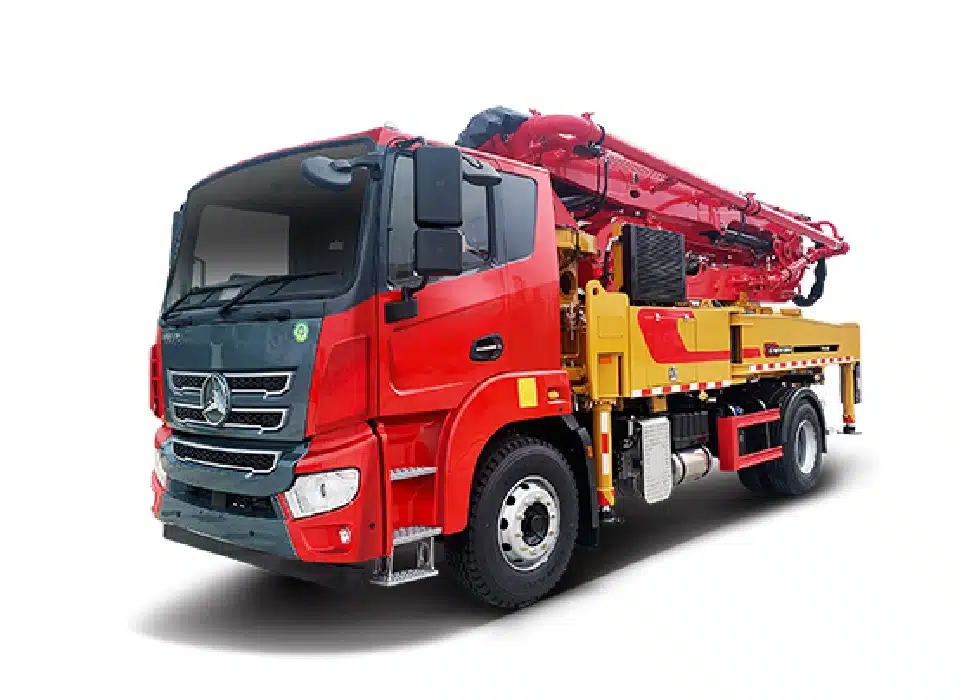
Used concrete pump truck
A concrete pump truck integrates a multi‑section folding boom onto a heavy‑duty truck chassis. It eliminates most manual pipe‑laying work and delivers concrete directly to casting points via boom nozzles. This strength makes it ideal for large‑scale commercial buildings and high‑rise residential projects where fast pouring speed is critical. Complete mobility supports quick relocation among multiple job sites within the same construction zone.
Nevertheless, this machine type has obvious limitations. It requires spacious ground space to fully extend outriggers and unfold the boom; cramped urban lots or narrow village construction sites cannot satisfy its working conditions. When inspecting second‑hand units, buyers must pay close attention to boom metal fatigue, aging hydraulic pipelines and outrigger deformation, since damaged booms bring major safety hazards during operation.
Used truck-mounted concrete pump
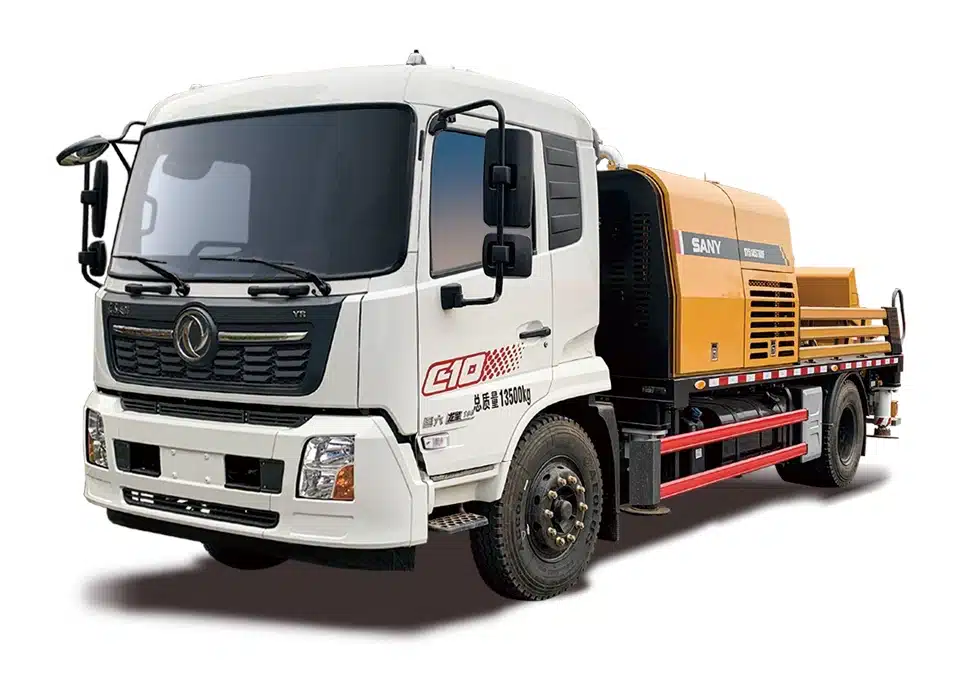
Different from boom‑equipped concrete pump trucks, the truck‑mounted concrete pump fixes the pumping host onto a standard truck chassis without folding booms. It occupies a middle position between concrete pump trucks and trailer pumps in terms of performance and cost.
Its biggest advantage lies in flexible mobility and compact overall size. It can drive directly into narrow urban construction plots or suburban renovation sites that cannot accommodate full‑size pump trucks. While relocation is convenient, all concrete distribution must rely on manually connected external pipelines. Maximum vertical and horizontal delivery distances are determined by pipeline layout rather than machine itself. For mid‑size housing construction and small‑scale road‑repair jobs, this model strikes a good balance between investment cost and construction efficiency.
Used trailer concrete pump
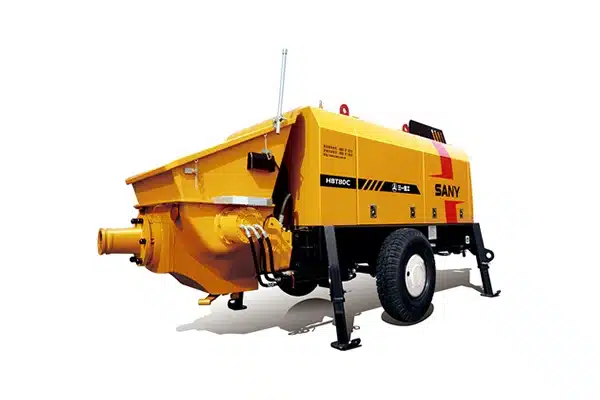
The trailer concrete pump (tow‑behind concrete pump) is a standalone pumping unit mounted on a trailer frame, with no self‑propelled driving system or placing boom. It must be towed by another truck when moving between work locations.
Its core competitive edge is powerful long‑distance pumping capacity. It excels at tunnel lining, deep‑pile foundation pouring and remote rural infrastructure projects. Among the three categories, trailer pumps carry the lowest acquisition cost. However, Operators need to assemble, fasten and dismantle long pipeline groups on‑site. Transferring the whole device also depends on extra towing vehicles. When sourcing second‑hand trailer pumps, buyers need to check trailer frame deformation, tire and braking conditions besides the pumping host itself.
Key Factors to Compare When Choosing Used Concrete Machinery
Project concrete output and pumping distance
Before picking equipment, buyers should clarify two core technical indicators: hourly concrete output, plus maximum vertical and horizontal pumping distance required by the project.
Concrete pump trucks shine for high‑rise building construction, their booms complete high‑altitude concrete delivery without extensive pipe installation. Trailer pumps become the preferred solution for tunnel or long‑distance horizontal foundation construction, where concrete needs to travel hundreds of meters. Truck‑mounted pumps fit medium‑height buildings and short‑distance transportation scenarios. It is worth noting that the actual pumping performance of second‑hand devices will decline to some extent due to component wear; buyers should refer to real test data instead of merely checking factory original parameters.
Construction site space and access road
Site spatial conditions directly determine whether certain pump models can work normally, which is a factor many first‑time buyers overlook.
If the construction entrance road is narrow, or the inner‑site operating area is compact, large‑size concrete pump trucks cannot unfold outriggers safely. In such cases, truck‑mounted pumps or trailer pumps are more feasible alternatives. For open‑air large‑scale construction sites with sufficient surrounding space, concrete pump trucks can give full play to their rapid‑construction strengths. Besides working‑zone space, it is also necessary to confirm whether access roads can bear the total weight of heavy‑duty pump equipment.
Transport and cross-border import logistics
For overseas importers, transportation and customs clearance costs constitute a large proportion of total landed expenditure, and machine dimensions and weight are decisive variables.
Concrete pump trucks belong to over‑dimension heavy break‑bulk cargo. They occupy large vessel space and generate high ocean‑freight charges, and they face higher risks of port congestion and detention at destination ports. Truck‑mounted pumps have moderate overall dimensions with relatively manageable logistics pressure. Trailer pumps feature compact structure; they take up minimal shipping space and bring down overall international transportation costs. Importers also need to verify local import policies: some countries impose special restrictions on the import age of second‑hand heavy‑duty pumping equipment.
Machine age, wear and spare parts availability
Machine age and working hours cannot serve as the sole judging standard. Some older units with good maintenance records still deliver stable performance, while high‑hour machines with poor upkeep may break down frequently.
Inspect critical components including the hydraulic system, main pumping cylinders and inner‑wall abrasion of delivery pipes. Give priority to mainstream well‑known brands whose replacement spare parts are widely available in target‑import countries. Even if a second‑hand pump is sold at a very low price, scarce spare‑part supply will trigger long‑term project downtime and huge economic losses.
Operating Cost Comparison Across Three Concrete Pump Types
Fuel and power consumption
Power‑supply modes vary greatly for the three pump types, leading to obvious differences in fuel expenditure.
Concrete pump trucks rely on the chassis engine to drive both vehicle travel and boom‑pumping actions. Fuel consumption remains high during continuous construction. Truck‑mounted pumps also adopt chassis‑engine drive, with fuel consumption sitting at a moderate level. Trailer concrete pumps are equipped with independent diesel engines specially for pumping work. When working non‑stop for long periods, their fuel consumption accumulates significantly. Yet unlike the other two models, trailer pumps consume zero fuel during relocation because they are towed rather than self‑driven.
On-site labor cost
Labor‑resource input reflects another major gap in actual use, especially for projects with frequent position shifts.
Concrete pump trucks require only a small operating crew. The boom deploys quickly, and manual pipe‑arranging work is kept to a minimum. Truck‑mounted pumps need several workers responsible for connecting and adjusting external delivery pipelines. Trailer pumps bring the highest labor demands. Every time the pouring position changes, workers must assemble, fix and remove lengthy pipeline systems. For projects with frequent working‑point migration, cumulative labor expenses will gradually widen the overall cost gap between different pump solutions.
FAQ
A concrete pump truck consists of a truck‑mounted concrete pump plus a folding placing boom. A truck‑mounted concrete pump is made up of a truck chassis combined with a trailer pump core pumping unit. The trailer concrete pump has no truck chassis or boom and must be towed to job sites.
Trailer pumps suit projects requiring long horizontal pumping, such as tunnels, foundation works and remote sites with limited budget.
Inspect hydraulic system, pumping cylinders, pipeline wear, chassis condition and machine working hours. Test running status before shipment.
Absolutely. Aggregate size, slump value and water‑cement ratio of concrete will influence pumping efficiency and blockage risk. Even well‑conditioned second‑hand pumps may face frequent pipe blockages if poor‑proportion concrete is used on site.
Conclusion
Many buyers hold wrong assumptions when shopping for pre-owned concrete pumping equipment. Some believe concrete pump trucks fit every construction site, ignoring boom space limits on compact job sites.Other buyers mix up truck-mounted pumps and full concrete pump trucks. A truck-mounted pump cannot pour concrete at height via a boom, and it depends on extended pipelines.Another frequent mistake is only focusing on low price. If spare parts are scarce for an aging trailer pump, maintenance delays will create heavy losses for ongoing projects.
Concrete pump trucks, truck-mounted pumps and trailer pumps serve different construction scenarios. There is no universal best model. The right used concrete pump machine depends on project scale, pumping distance, site conditions, budget, operating cost and logistics arrangements. Buyers can compare specifications and carry out full machine inspection before making decisions.