In the modern construction industry, efficiently delivering high-quality concrete to job sites is crucial. Therefore, choosing a high-performance Cement Truck directly impacts the success and profitability of your projects. You are not just buying a machine; you are investing in the long-term productivity of your construction business. This guide will provide you with a comprehensive perspective, from core parameters to brand selection, to help you make informed decisions and ensure the smooth execution of your projects.
1.Determine Core Needs: Capacity and Size
When purchasing a cement truck, your first consideration should be its carrying capacity, which is the volume of the mixing drum.
Choose Based on Project Scale
You need to evaluate the typical scale of your engineering projects as well as the road conditions.
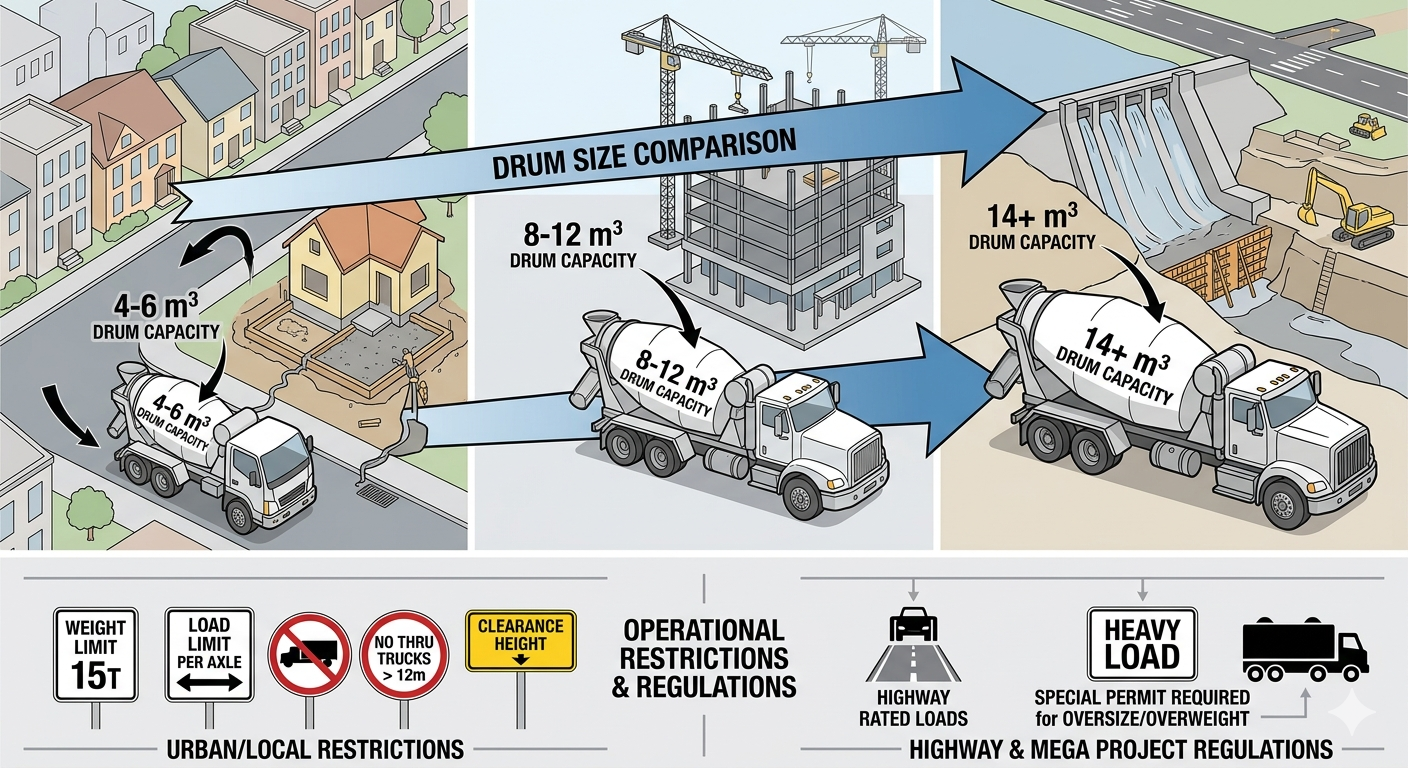
- Small Projects & Narrow Urban Roads: For narrow city streets or smaller construction tasks (like residential renovations), a 4-6 cubic meter (m³) concrete mixer truck is a more flexible choice. They can easily navigate restricted roads.
- Mid-to-Large Construction Projects: Most general construction projects and highway construction utilize mainstream capacities of 8-12 m³. This size strikes a good balance between transport efficiency and on-site adaptability.
- Ultra-Large Infrastructure Projects: For mega-projects like dams or large airport runways, you may need a larger-capacity concrete mixer truck of 14 m³ and above to minimize the number of round trips between the mixing station and the job site.
Consider Local Regulations
Furthermore, please be sure to verify the road weight limit regulations at the destination. The fully loaded weight of your chosen model cannot exceed the permitted limit for local roads; otherwise, you may face fines or restricted travel.
2.Core Technical Parameters: Chassis and Power
The performance of a Cement Truck depends significantly on its chassis and engine.
Drive Forms
You should select the appropriate drive form based on the job site terrain.
- 4×2 Drive: Suitable for flat urban road transport.
- 6×4 Drive: The most common configuration, balancing highway speed and off-road capability.
- 8×4 Drive: Provides greater traction and stability for more demanding work conditions and heavier loads.
Engine Performance and Emission Standards
Selecting an engine with sufficient torque and good fuel economy is crucial.
- Power Performance: You need powerful performance to ensure the concrete mixer can climb hills and drive efficiently when fully loaded. Weichai and Cummins are very reliable power options in construction machinery today.
- Emission Standards: Depending on the environmental requirements of your target market, choose a mixer truck that complies with the corresponding emission standards (e.g., Euro 2 to Euro 6). This not only affects the purchase cost but also the operational qualifications of the equipment locally.
3.Mixing System: The ‘Heart’ Components
The mixing drum and its drive system are the heart of the vehicle, directly affecting concrete mixing quality and discharge efficiency.
The Big Three: Hydraulic System and Reducer
When you are inspecting a Concrete Mixer Truck, you must focus on the hydraulic pump, hydraulic motor, and reducer.
- Hydraulic System: It is the power source for the mixing drum’s rotation. We strongly recommend selecting products from globally renowned brands like Rexroth, Eaton, or Sauer-Danfoss. A high-quality hydraulic system ensures the mixing drum operates smoothly under various loads.
- Reducer: Responsible for regulating the drum’s rotational speed and increasing torque. Choosing a reducer from a reliable brand like ZF or PMP significantly improves the equipment’s durability and service life.
Drum and Blade Design
The wear resistance of the mixing drum and the design of the blades are also very important.
- Wear-Resistant Materials: High-quality mixing drums are usually manufactured using high-strength wear-resistant steel to resist long-term erosion from concrete.
- Blade Design: Scientific spiral blade design not only guarantees uniform concrete mixing but also effectively reduces the residual rate during discharge. A lower residual rate means you can maximize the use of every cubic meter of concrete, thereby increasing profits.
Water Tank and Cleaning System
The concrete truck should be equipped with a large-capacity water tank and a convenient cleaning system. Timely cleaning of the mixing drum is essential to prevent concrete solidification and maintain equipment performance.
4. Brand Power and Resale Value
Choosing a well-known brand of concrete mixer truck brings multiple guarantees.
Leading Chinese Brands
In the international construction machinery market, Chinese brands have won widespread recognition for their excellent cost-performance ratio and reliable performance.
- Brand Selection: SANY, Zoomlion, and XCMG are among the leaders. They not only have mature technology but have also established comprehensive spare parts supply and after-sales service networks globally.
- Resale Value: Brand power is reflected not only in new machine performance but also in secondhand market performance. Due to easy access to parts and convenient maintenance, a mixer truck from these leading brands typically possesses extremely high resale value (retention rate) in international markets.
5. Special Focus: Buying a Used Cement Truck
Due to budget considerations, buying a used Cement Truck is also a reasonable choice for many businesses. However, selecting secondhand equipment requires a more professional eye.
Expert Inspection Checklist
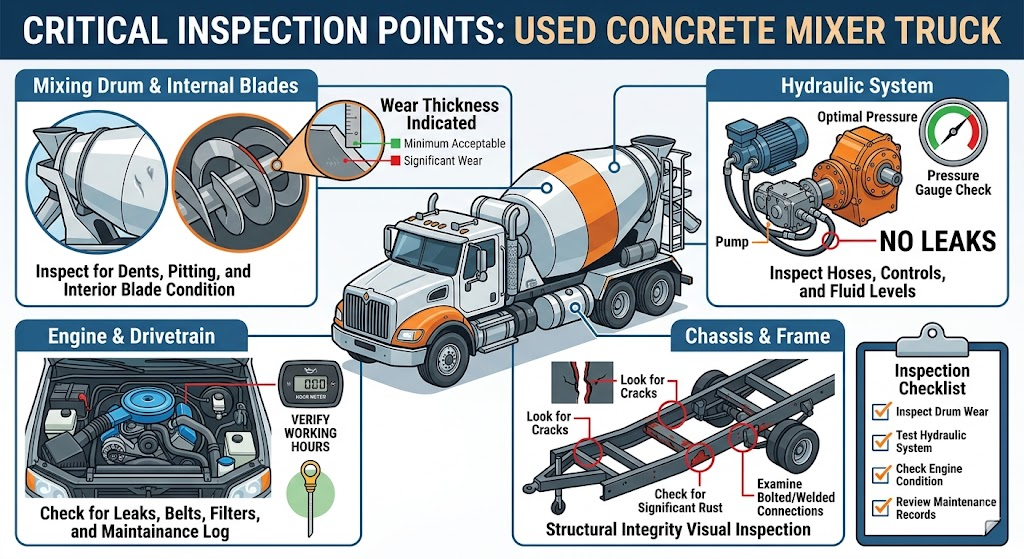
If you plan to purchase a used concrete mixer truck, please be sure to perform the following checks:
- Mixing Drum Wear: Observe the drum for any repair welding or obvious external dents. More importantly, check the thickness and wear of the internal blades.
- Working Hours and Mileage: You cannot just look at the odometer; combine it with the equipment’s working hours to assess its true intensity of use.
- Hydraulic System Pressure Test: During the test run, observe if the mixing drum rotates smoothly forward and reverse, listen for any abnormal noises, and check all hydraulic system components for signs of oil leakage.
- Engine and Chassis: Check if the engine runs smoothly without white or black smoke. Inspect the frame for cracks or severe corrosion.
- Maintenance Records: If the seller can provide complete maintenance records from the original manufacturer or a professional institution, this will greatly increase the equipment’s reliability.
Conclusion
In summary, choosing the right Cement Truck requires a comprehensive balance of project needs, equipment performance, brand reputation, and after-sales support, among many factors. Whether you are purchasing a new machine or a more cost-effective secondhand unit, sufficient research and professional assessment are the keys to success.
FAQ
The price of a used cement truck typically ranges from $15,000 to $55,000, depending on three core factors:
Drum Capacity: 8m³ to 10m³ models are more budget-friendly, while 12m³ to 14m³ models command a premium.
Chassis Brand: Premium chassis like Mercedes-Benz or Isuzu cost more than domestic Chinese brands like Howo or Shacman.
Year & Hours: A 2018-2020 model with under 5,000 working hours offers the best balance of price and remaining service life.
For international exports, three brands dominate the market:
SANY: Known for its highly wear-resistant mixing blades and superior hydraulic stability.
Howo (Sinotruk): The most popular choice for Africa and Southeast Asia due to its extreme durability and the ease of finding spare parts.
Zoomlion: Offers advanced electronic control systems and high-torque performance for large-scale projects.
To ensure a “ready-to-work” condition, follow this checklist:
Hydraulic System: Check the pump and motor for leaks or unusual vibrations.
Drum Condition: Inspect for concrete buildup (crust) inside and measure blade thickness.
Engine & Transmission: Verify the gear shifting smoothness and check for exhaust smoke color.
Chassis Frame: Look for any signs of structural welding or rust on the main beams.
Choosing the right capacity depends on your project needs and local road regulations. A 10m³ mixer is ideal for urban residential projects with tighter access, while a 12m³ or 14m³ mixer is more efficient for large infrastructure sites (like highways or bridges) where maximizing the payload per trip is critical for ROI.