Choosing the right crane is not just a technical decision; it is a financial one that dictates your project’s efficiency and ROI. For heavy-lift professionals, the debate often boils down to two titans: Crawler Cranes and All-Terrain Cranes.
While both offer massive lifting power, they excel in vastly different environments. In this guide, we break down their core differences to help you select the machine that delivers the best “value-to-work” ratio for your fleet.
1.Crawler Cranes: The Stability Powerhouse
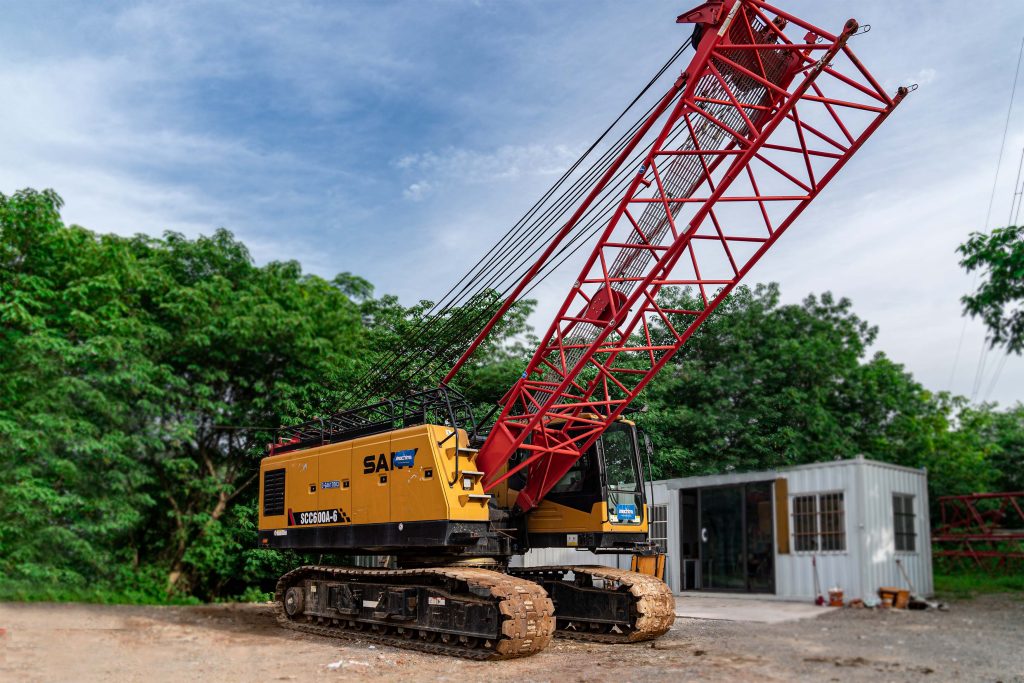
Crawler cranes are the go-to choice for long-term, high-capacity projects. Mounted on a pair of tracked “crawlers,” these machines prioritize sheer strength and stability over speed.
Massive Lifting Capacity and Stability
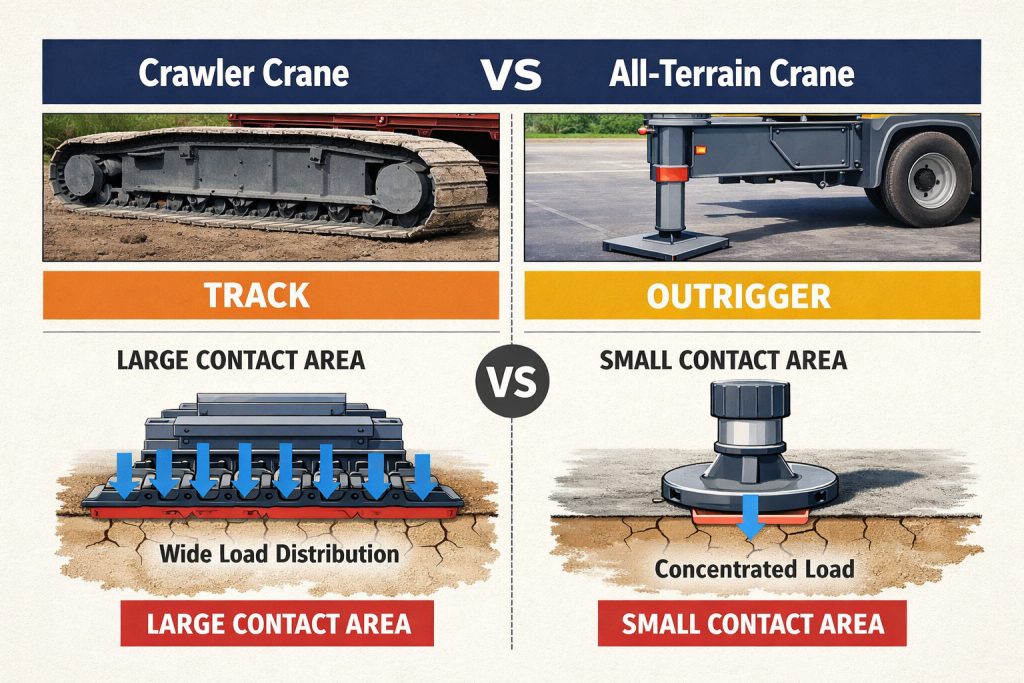
Crawler cranes typically handle heavier loads than their wheeled counterparts. Because their tracks distribute weight over a large surface area, they provide an incredibly stable base. This design allows them to operate on soft or uneven ground where a wheeled crane might sink or tip.
“Pick-and-Carry” Capability
One of the crawler’s greatest competitive advantages is its ability to move while carrying a load. Unlike cranes that require outriggers, a crawler crane can pick up a heavy component and travel with it to the installation point. This “pick-and-carry” feature saves hours of site preparation and repositioning.
Best For: Long-Term Infrastructure
Project managers favor crawler cranes for wind turbine installations, bridge building, and large-scale industrial plants. If your project spans several months in a single location, the crawler’s stability outweighs its logistical complexity.
2.All-Terrain Cranes: The Versatile Road Warrior
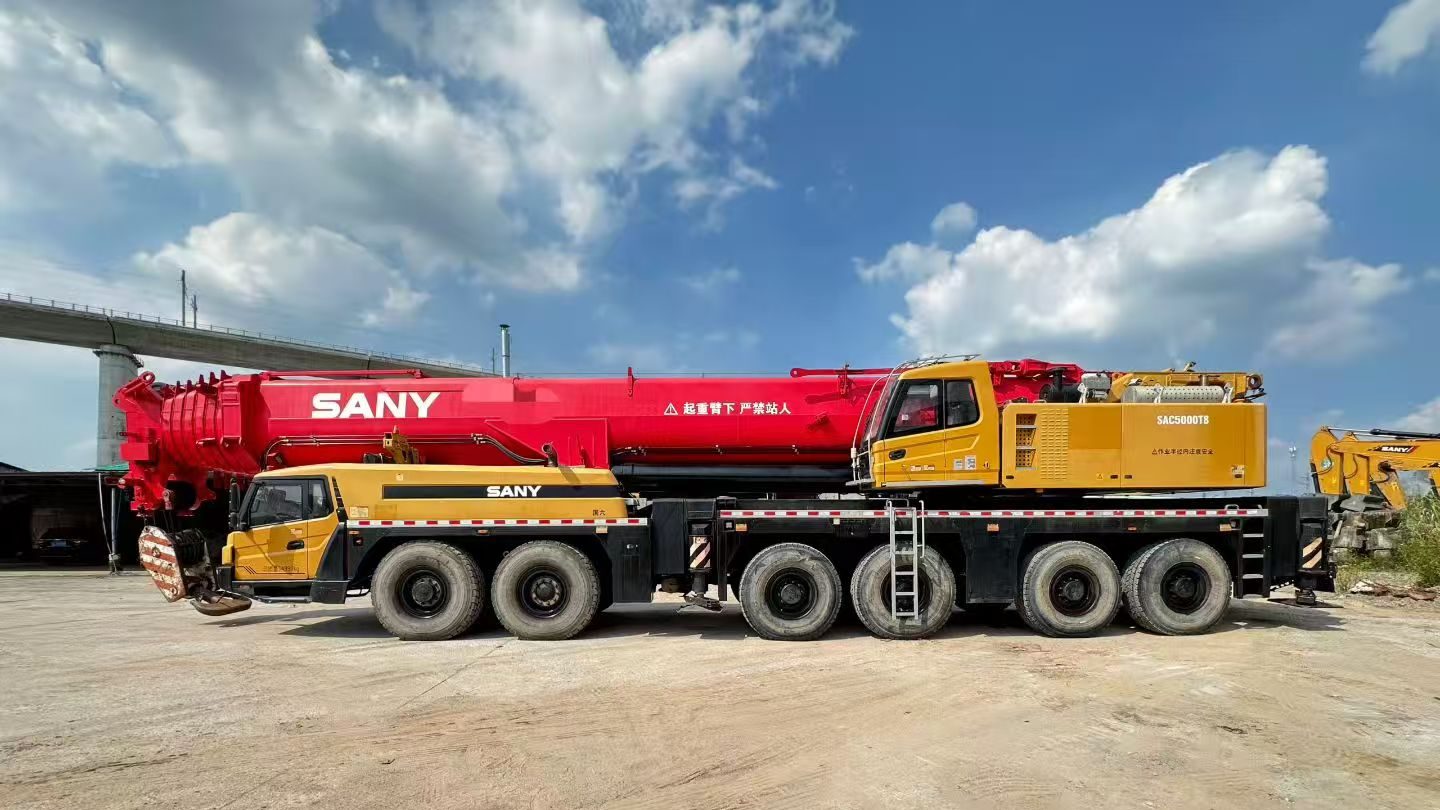
All-terrain cranes combine the road speed of truck cranes with the off-road capability of rough-terrain models. They are the “Swiss Army Knives” of the lifting world.
Superior Mobility and Speed
The AT crane’s primary strength is its ability to drive directly on public highways. It can reach speeds of 80 km/h (50 mph), allowing it to travel between multiple job sites in a single day. This eliminates the need for specialized transport trailers, significantly reducing mobilization costs.
Compact Design for Urban Constraints
Equipped with multi-axle steering, AT cranes can maneuver through tight city streets and crowded construction zones. Their ability to “crab steer” (move diagonally) makes them indispensable for urban high-rise projects where space is a luxury.
Fast Setup with Outriggers
While an AT crane relies on outriggers for stability, modern hydraulic systems allow for rapid deployment. An experienced crew can have an AT crane ready to lift within an hour of arriving on-site.
3.Head-to-Head: 4 Key Decision Factors
To simplify your choice, let’s compare how these machines perform in the field.
| Feature | Crawler Crane | All-Terrain Crane |
| Mobility | Requires disassembly & multiple trucks | Highway legal; self-propelled |
| Ground Pressure | Low (Excellent on soft soil) | High (Requires mats/solid ground) |
| On-Site Movement | Can “Pick-and-Carry” | Must be stationary (on outriggers) |
| Setup Time | Days (Complex assembly) | Hours (Fast deployment) |
Ground Conditions and Pressure
If you are working in the desert sands of the Middle East or the marshy regions of Russia, ground pressure is your biggest enemy. Crawler cranes exert much less pressure per square inch, reducing the need for expensive ground stabilization.
Transportation Logistics
This is where costs diverge. Moving a 300-ton crawler crane like a SANY SCC series requires several trailers to haul the tracks, counterweights, and boom sections. Conversely, an AT crane travels as a single unit (or with one support truck for extra counterweight), making it far more cost-effective for short-term jobs.
Resale Value and Durability
From an investment perspective, used crawler cranes often retain high resale value due to their robust, simpler mechanical structures. Brands like SANY, XCMG, and Zoomlion have proven that well-maintained used units can perform for decades with consistent hydraulic maintenance.
4. Final Verdict: Which One Should You Buy?
The “better” crane depends entirely on your project’s DNA:
- Choose a Crawler Crane if: Your project is long-term, requires maximum lifting capacity (over 300 tons), or involves soft, unprepared terrain where moving with a load is necessary.
- Choose an All-Terrain Crane if: You need to move between multiple sites, work in confined urban areas, or require a fast “in-and-out” setup to keep labor costs low.
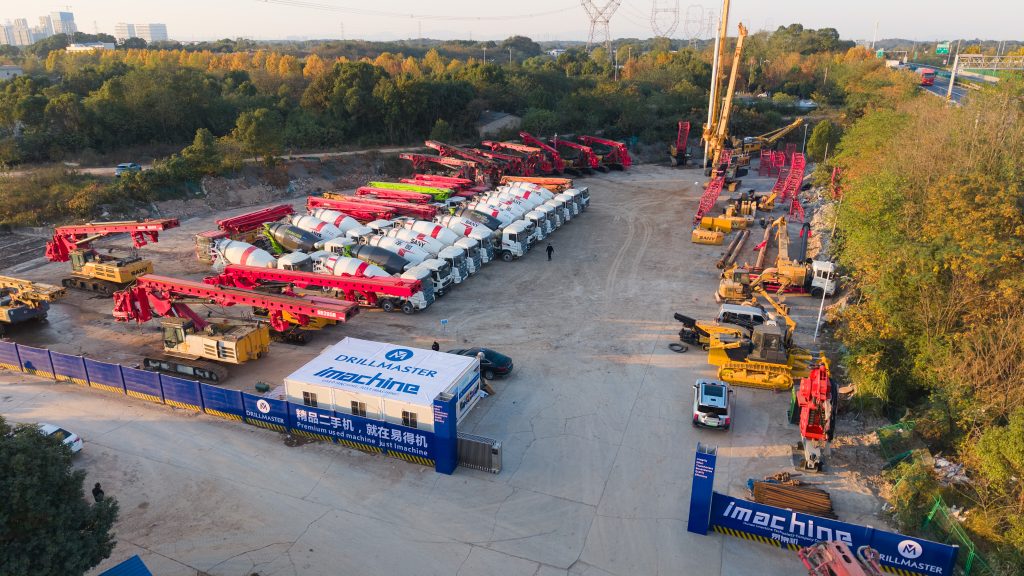
Are you looking for reliable used machinery? At imachine, we specialize in sourcing high-condition, “ready-to-work” crawler cranes and all-terrain cranes from top manufacturers. Whether you need the heavy-duty stability of a SANY crawler or the urban agility of a Zoomlion AT crane, we provide full technical inspections to ensure your investment stays on the job, not in the shop.